
Spinal Decompression Therapy
Spinal decompression is a non-surgical, mechanical therapy used to alleviate back and neck pain. It involves the use of a dynamic table that gently stretches the spine to change the force and position of the spinal column.

What is Spinal Decompression?
This therapy is a form of traction. By creating a controlled stretch, it aims to relieve pressure on the spinal discs—the gel-like cushions between the bones in your spine. When these discs are compressed due to injury or age, they can bulge or herniate, putting pressure on nearby nerves. Decompression helps to create negative pressure within the disc, which can encourage bulging or herniated material to retract.
How It Works
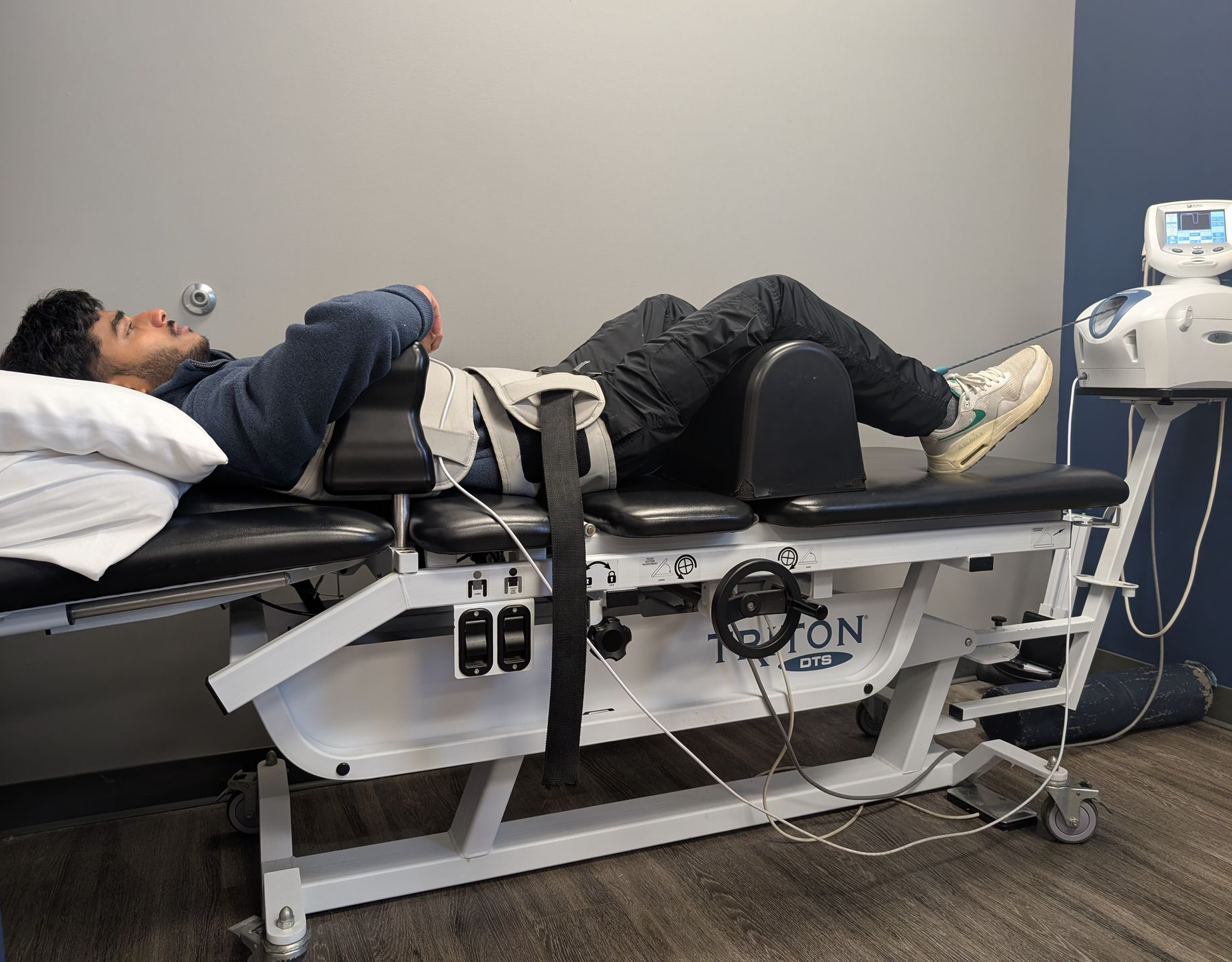
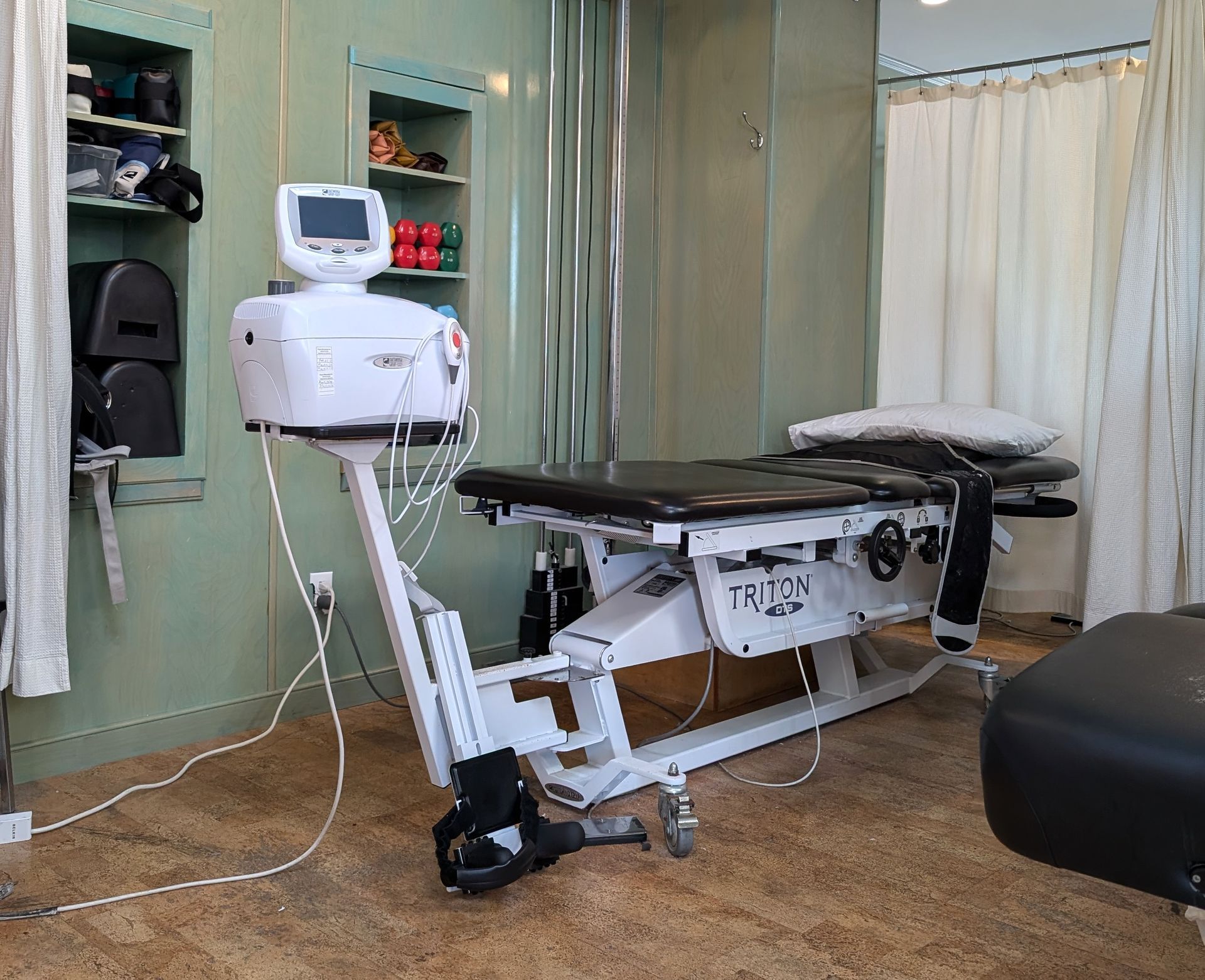
During a session, you lie on a computer-controlled table which gently stretches your spine—at CARE Institute, we utilize the Triton Traction Decompression System.
The process works through several key mechanisms:
- Pressure Reduction: The gentle stretching creates a vacuum-like effect (negative intradiscal pressure) that helps reposition disc material away from compressed nerves.
- Nutrient Intake: By opening the space between vertebrae, the therapy encourages the flow of water and nutrient-rich fluids into the discs. This environment supports pain relief for damaged or worn spinal structures.
- Gradual Loading: The system uses a specific pull-and-release pattern rather than a continuous, static pull. This rhythmic approach allows the spine to elongate gradually, which helps the surrounding soft tissues stay relaxed during the treatment.
Conditions Addressed
Spinal decompression is often utilized for:
- Sciatica: Pain, weakness, or tingling that travels down the leg.
- Bulging or Herniated Discs: Discs that have shifted or herniated.
- Degenerative Disc Disease: Wear and tear of the spinal discs over time.
- Spinal Stenosis: Narrowing of the spaces within your spine.
What to Expect During Treatment
A typical session lasts between 15 and 20 minutes. Most people find the sensation to be a gentle, rhythmic pulling which enables relaxation. The force is applied gradually and is controlled by a computer.
While some people notice changes within the first few sessions, a full course of treatment usually involves multiple visits over several weeks. A provider at CARE Institute will determine the appropriate frequency based on your specific condition and physical assessment.
Why Choose Our Clinic?
While this therapy is a non-invasive option for many, it is not suitable for everyone. People with the following conditions cannot receive spinal decompression (list is not exhaustive):
- Pregnancy
- Spinal fractures
- Advanced osteoporosis
- Metal implants in the spine (rods or screws)
- Spinal tumors or infections
- Abdominal aortic aneurysm
Is Spinal Decompression Right for You?
Spinal decompression is a non-invasive alternative to more intensive interventions. Before starting, a provider at CARE Institute will review your health history and any available imaging (such as X-rays or MRIs) and conduct a detailed physical exam to ensure this therapy is appropriate for your needs.