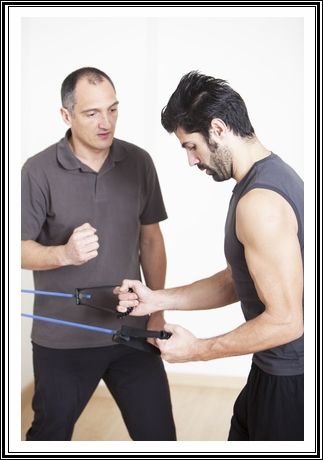
 The wrist itself is not a bone, but a joint connecting the hand and the forearm. A wrist fracture can impact daily life for a long period of time. There can be many sources of wrist pain, ranging from sudden onset (a fracture after a fall or trauma) to repetitive stress leading to arthritis or carpal tunnel syndrome.
 Given the importance of the wrist in daily activities, the objective of physical therapy is to help regain full motion of the affected wrist. Physical therapy can also help reduce swelling, control pain, improve strength, improve balance and regain independence, especially in older patients.
Wrist fractures are typically treated by applying a cast that holds the wrist in place, provides protection from movement and helps reduce pain. In some cases, surgical correction may be required. Once pain and swelling is reduced, the objective of the healthcare team changes. The new priority is joint range of motion and restoration of muscle strength. This is where physical therapy plays an important role.
 Pay attention to ergonomics
. There are tons of devices to help improve the ergonomic setup of your work/home office. Ergonomic keyboards can help take the stress off your wrists when you’re typing. The height of your chair and the position of your monitor relative to your head and neck will affect the angle of inclination of your wrist and entire upper body.
Pay attention to ergonomics
. There are tons of devices to help improve the ergonomic setup of your work/home office. Ergonomic keyboards can help take the stress off your wrists when you’re typing. The height of your chair and the position of your monitor relative to your head and neck will affect the angle of inclination of your wrist and entire upper body.